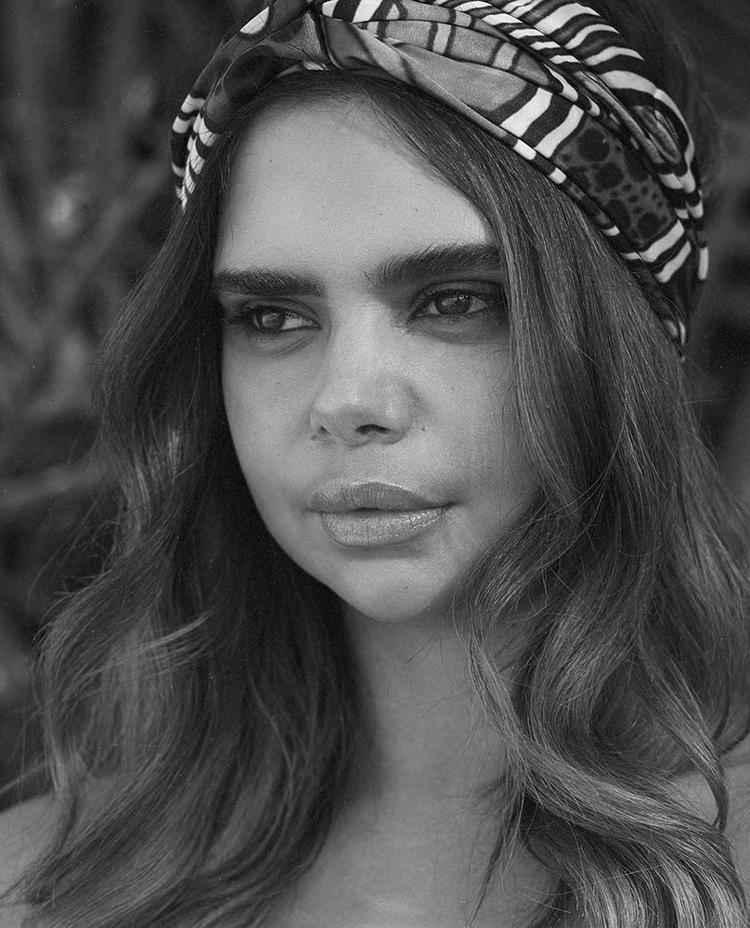
Noreena Kadibil is a First Nations Artist, a proud Kartujarra woman, currently residing on Martu Country (Western Australia).
2026
marks the start of our creative collaboration
1
exclusive artwork licensed and celebrated
17
unique products made for impact
Introduction
“My Country is Katjarra (Carnarvon Range), between wells 6 and 9 on the Canning Stock Route. This is my dad’s Country, and my grandfather’s and grandmother’s Country. Mum was born in Savory Creek. My grandmother used to live in Jigalong before Old Jigalong got started. I grew up in Wiluna and on Lake Violet Station, but we moved to Jigalong in 1969 after my father passed away. I moved to Parnngurr with my husband and five children in 1984. There was too much humbug in town, it’s a quieter place out here.
I only paint my grandfather’s and grandmother’s Country, that’s our traditional lands. I have other Country, but there are other people connected to it. I paint pictures of my Country to keep it safe and to show my kids how to look after it.”
Noreena is a senior Martu artist whose work is grounded in deep cultural and familial ties to her ancestral lands of Katjarra, located between Wells 6 and 9 on the Canning Stock Route. Taught by her parents and grandparents, Noreena paints to preserve and pass on knowledge of her traditional Country, ensuring future generations can continue to care for it.
Noreena was taught about her traditional lands and how to survive in the desert by her parents and grandparents. Her mother, Daisy, was a member of the Stolen Generations and one of the sisters whose journey inspired the acclaimed film Rabbit-Proof Fence. Today, Noreena continues to pass her knowledge on to her children and grandchildren, both through storytelling and painting.
"I paint pictures of my Country to keep it safe and to show my kids how to look after it."
Work with Noreena
Custom art commissions are available. Collaborating with you to conceive a unique composition, size and colour palette, Noreena is dedicated to creating an artwork that resonates with your business or cause.
For more information contact Life Apparel and we will get you in touch with Noreena.
The 2026 theme marks five decades of NAIDOC as a nationally recognised movement celebrating First Nations culture, resilience and community leadership. It reflects on the journey and the role NAIDOC continues to play in building respect, understanding and a shared future.
Minyipuru, or Jakulyukulyu (Seven Sisters), is a central Jukurrpa (Dreaming) narrative for Martu and other First Nations peoples, associated with the seasonal Pleiades star constellation. Relayed through song, dance, stories and paintings, Minyipuru serves as a creation narrative and a source of knowledge relating to the physical properties of the land, and an embodiment of Aboriginal cultural laws. When Martumili Artists was established in 2005, this was the first Jukurrpa story the artists agreed to paint for a broader public.
Beginning in Roebourne on the west coast of Western Australia, the story evolves as it moves eastward across the land, following a group of women as they walk, dance, and even fly from waterhole to waterhole. As they travel, the women camp, sing, wash, dance and gather food, leaving markers in the landscape and creating landforms that remain to this day, such as groupings of rocks and trees, grinding stones and seeds. Throughout their journey, the women are pursued by a lustful old man, Yurla, while interactions with other animals, groups of men, and spirit beings are also chronicled.
Limited Edition
Minyi Puru
Medium: Acrylic On Canvas Year: 2026
Story
The 2026 theme marks five decades of NAIDOC as a nationally recognised movement celebrating First Nations culture, resilience and community leadership. It reflects on the journey and the role NAIDOC continues to play in building respect, understanding and a shared future.
Minyipuru, or Jakulyukulyu (Seven Sisters), is a central Jukurrpa (Dreaming) narrative for Martu and other First Nations peoples, associated with the seasonal Pleiades star constellation. Relayed through song, dance, stories and paintings, Minyipuru serves as a creation narrative and a source of knowledge relating to the physical properties of the land, and an embodiment of Aboriginal cultural laws. When Martumili Artists was established in 2005, this was the first Jukurrpa story the artists agreed to paint for a broader public.
Beginning in Roebourne on the west coast of Western Australia, the story evolves as it moves eastward across the land, following a group of women as they walk, dance, and even fly from waterhole to waterhole. As they travel, the women camp, sing, wash, dance and gather food, leaving markers in the landscape and creating landforms that remain to this day, such as groupings of rocks and trees, grinding stones and seeds. Throughout their journey, the women are pursued by a lustful old man, Yurla, while interactions with other animals, groups of men, and spirit beings are also chronicled.
Minyi Puru
Minyi Puru
Medium: Acrylic On Canvas Year: 2026
Story: The 2026 theme marks five decades of NAIDOC as a nationally recognised movement celebrating First Nations culture, resilience and community leadership. It reflects on the journey and the role NAIDOC continues to play in building respect, understanding and a shared future.
Minyipuru, or Jakulyukulyu (Seven Sisters), is a central Jukurrpa (Dreaming) narrative for Martu and other First Nations peoples, associated with the seasonal Pleiades star constellation. Relayed through song, dance, stories and paintings, Minyipuru serves as a creation narrative and a source of knowledge relating to the physical properties of the land, and an embodiment of Aboriginal cultural laws. When Martumili Artists was established in 2005, this was the first Jukurrpa story the artists agreed to paint for a broader public.
Beginning in Roebourne on the west coast of Western Australia, the story evolves as it moves eastward across the land, following a group of women as they walk, dance, and even fly from waterhole to waterhole. As they travel, the women camp, sing, wash, dance and gather food, leaving markers in the landscape and creating landforms that remain to this day, such as groupings of rocks and trees, grinding stones and seeds. Throughout their journey, the women are pursued by a lustful old man, Yurla, while interactions with other animals, groups of men, and spirit beings are also chronicled.
Life Apparel is a Member & Signatory of the Indigenous Art Code.
This means we are committed to fair and ethical trade with Aboriginal and Torres Strait Islander artists, and transparency in the promotion and sale of artwork. As a Dealer Member and signatory to the Code we must act fairly, honestly, professionally and in good conscience in all direct or indirect dealings with artists.
Subscribe for updates, community events, member offers and new product drops.
Acknowledgement Of Country
Life Apparel celebrates and acknowledges the traditional custodians of the land on which we live and work, the Kombumerri families of the Yugambeh Language Region. We pay our respects to Elders past, present and emerging for their generosity and custodianship of Country throughout Australia.
We recognise and honour the ongoing connection and deep spiritual relationship that Aboriginal and Torres Strait Islander peoples have to this Country, and acknowledge the unique role they play in caring for and protecting it for future generations. As an Australian-led boutique label and proud allies, we demonstrate our respect for First Nations peoples through our commitments to environmentally sustainable and ethical business practices. We recognise their continuing connection to land and waters, and thank them for protecting our natural resources and ecosystems.
Choosing a selection results in a full page refresh.